
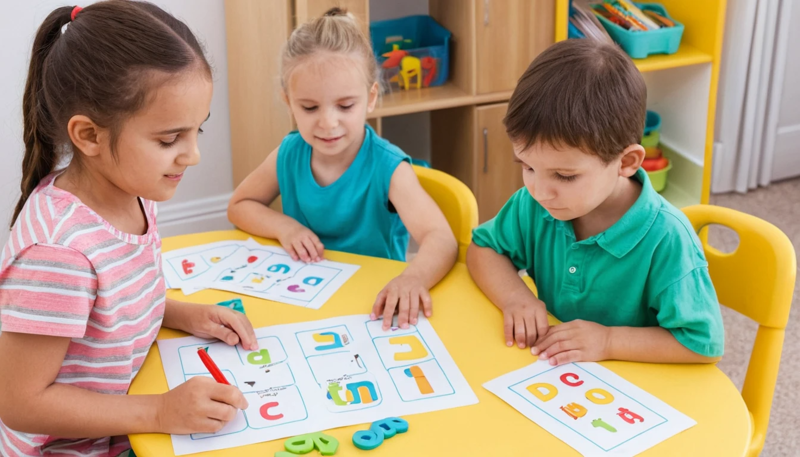
Kindergarten phonics activities for beginners made fun and easy! Discover 15 engaging, beginner-friendly ideas that help kids master letter sounds and reading skills fast.
Kindergarten Phonics Activities for Beginners: 15 Fun Ways to Boost Early Reading Skills 🎉
What if teaching your kindergartner to read was more like playtime than schoolwork?
Sounds dreamy, right? But here’s the thing—it can be! When you make phonics fun and interactive, kids not only stay engaged, they actually look forward to learning.
In this article, we’re diving deep into 15 creative and easy phonics activities that are perfect for beginners. Whether you’re a parent, teacher, or homeschooler, these tips will help little learners build strong reading foundations—without the tears.
So, grab some crayons, scissors, and maybe a handful of goldfish crackers (as rewards, of course), and let’s make phonics an adventure! 🚀
What Are Phonics and Why Do They Matter in Kindergarten?
Phonics is the method of teaching kids how letters and sounds connect to form words. It’s like the ABCs and their superpowers—when kids understand that B makes a /b/ sound, they can start building words like bat or ball.
In kindergarten, this foundation is key. Phonics sets the stage for reading fluency, comprehension, and spelling. Without it, kids often struggle with decoding, which affects everything else down the road.
What Should Phonics Activities for Beginners Include?
When planning activities for young learners, think simple, hands-on, and repetitive—but not boring. A good beginner phonics activity should:
- Introduce or reinforce letter sounds
- Use visual and tactile aids (like pictures or manipulatives)
- Encourage movement, interaction, or play
- Involve listening and speaking
- Include review and repetition
1. Alphabet Sound Hunt 🕵️♀️
Goal: Identify beginning sounds.
What You Need:
- Flashcards with letters
- Small objects/toys (apple, button, car, etc.)
How to Play:
Hide the objects around a room. Have kids find one, then match it to the letter it starts with. For example, an apple goes with A.
🧠 Why it works: Kids connect sounds to real items they already know.
2. Phonics Hopscotch 🦘
Turn phonics into a movement game!
How to Play:
Draw a hopscotch board, but instead of numbers, write letters. When they land on a letter, ask for the sound. Bonus: have them say a word that starts with it!
3. Sound Sorting Bins 🗂️
Give kids a few small bins and a bunch of picture cards. Ask them to sort the pictures by beginning sounds (e.g., all /b/ sounds in one bin).
4. Sing-Along Letter Songs 🎵
Songs like “The Letter A Says /a/” to the tune of “The Farmer in the Dell” can make sounds stick. You can find tons of these online or make up your own!
5. Magnet Letter Match-Ups 🧲
Use a cookie sheet and some magnetic letters. Say a sound and have your child find the matching letter. Or vice versa!
6. “What’s That Sound?” Game
Say a word (like “cat”), and ask your child:
“What sound do you hear at the beginning?”
Once they master beginning sounds, switch to ending or middle sounds!
7. Phonics Playdough Smash 👊
Create small letter cards. Give your child a ball of playdough. Say a sound—when they hear it, they smash the matching letter. It’s very fun!
8. Feed the Phonics Monster 🍽️
Make a monster from a tissue box. Feed it only pictures or words with a certain sound. For example, on /m/ day, only moon, mug, and mop are allowed.
9. Letter-Sound Bingo 🎯
Create a bingo board with pictures. Call out the sound, and have them cover the matching image.
10. Phonics Puzzles 🧩
Cut pictures in half. One side shows the image, and the other shows the beginning letter. Let kids match them up.
11. I Spy With My Little Eye… a Sound! 👀
Say, “I spy something that starts with the /t/ sound.” Let your child guess what you’re thinking of in the room.
12. Word Family Slides 🛷
Make a paper slide where kids can move beginning letters in front of -at, -an, -it, etc., to make new words like cat, bat, mat.
| Word Family | Examples |
|---|---|
| -at | cat, hat, mat |
| -an | fan, man, pan |
| -ig | pig, wig, dig |
13. Sticker Sound Charts 🌟
Each time your child learns a new sound, let them add a sticker to a chart. It’s a great visual motivator and reward system.
14. Digital Phonics Games 📱
There are tons of free apps that offer phonics games. A few popular ones:
- Starfall ABCs
- Teach Your Monster to Read
- ABCmouse
Just make sure screen time is balanced with hands-on time.
15. DIY Flip Books 📖
Create mini flip books with one letter and a word ending on each page. Your child can flip through and sound out words like p-an, r-an, f-an.
✅ Bonus Ideas for Reinforcement
- Read Aloud Time: Choose books with repetitive phonics patterns (like Hop on Pop).
- Rhyming Riddles: Ask, “What rhymes with cat?”
- Phonics Dance Party: Move while saying each sound. “A says /a/!” (jump), “B says /b/!” (spin)
💡 “If a child memorizes ten words, they can only read ten words. But if they learn ten sounds, they can read hundreds.”
— Reading Expert Quote
How to Keep It Fun and Avoid Burnout (For You and Your Child)
Some days, even fun things can feel like work. Here are a few survival tips:
- Mix it up! Switch between games, songs, books, and worksheets.
- Celebrate small wins—even getting one sound right is a win.
- Keep sessions short (10–15 mins).
- Use real-life moments to practice.
- Let them teach you a sound—kids love feeling like the expert.
🧠 At-A-Glance: Sound Milestones by Kindergarten
| Skill | When to Expect |
|---|---|
| Recognize letter names | Early kindergarten |
| Match letters to sounds | Mid-kindergarten |
| Blend simple words | Late kindergarten |
| Read CVC words (cat, dog) | By end of kindergarten |
Final Thoughts: Learning to Read Should Feel Like Magic ✨
Teaching phonics doesn’t have to be hard. Mix play with learning to make it fun. Start early to build confidence in reading.
Make phonics something your child wants to do. With 15 fun activities, you’re ready to make learning joyful and effective. 💛
🙋♀️ FAQs: Kindergarten Phonics Activities for Beginners
1. What age should I start phonics with my child?
Kids are ready around age 4–5. Start early by pointing out letter sounds in daily life.
2. How long should a phonics lesson be for a kindergartner?
Keep it short—10 to 15 minutes max. Focus on quality, not quantity.
3. My child mixes up letters and sounds—what should I do?
That’s normal at first! Use lots of repetition and sensory activities to help.
4. Can I teach phonics without a curriculum?
Absolutely! Hands-on activities can be just as effective if you follow a logical order and review often.
5. What are the first sounds I should teach?
Start with common consonants like m, s, t, b, and a. They appear in many simple words and are easy to say.